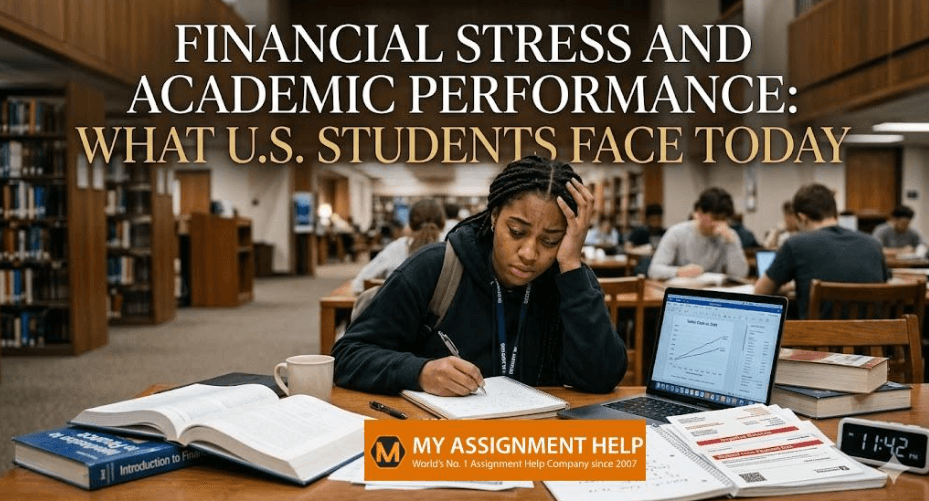
The pursuit of higher education in the United States has long been viewed as the ultimate gateway to the American Dream. However, for a growing majority of high school seniors and college students, that gateway is increasingly guarded by a formidable toll collector: financial stress.
As tuition costs outpace inflation and the cost of living in academic hubs skyrockets, the correlation between a student’s bank balance and their GPA has never been more pronounced. Financial stress is no longer just a “background noise” issue; it is a primary determinant of academic success, mental health, and long-term career trajectories.
The Rising Cost of the “College Experience”
To understand the stress students face, one must first look at the numbers. Over the last few decades, the cost of attending a four-year institution has more than doubled. According to data from the National Center for Education Statistics (NCES), the average tuition and fees for full-time undergraduate students have seen a consistent upward trend, leaving families to bridge the gap with high-interest loans and multiple part-time jobs.
For a high school student looking toward the future, the prospect of six-digit debt before they even earn their first professional paycheck is daunting. This “debt-first” mentality changes how students approach their studies. Instead of choosing majors based on passion or societal contribution, many feel forced into high-salary fields simply to ensure they can service their future loan payments. This shift represents a fundamental change in the American educational philosophy—moving from “learning for the sake of growth” to “learning for the sake of debt survival.”
How Financial Stress Manifests in the Classroom
Financial stress isn’t just about not having enough money for textbooks; it’s a cognitive burden that physically alters a student’s ability to learn.
1. The Cognitive Load Theory
Psychologists often speak of Cognitive Load—the amount of mental effort being used in the working memory. When a student is constantly worried about how they will pay next month’s rent, their cognitive bandwidth is depleted. This often leads students to search for academic safety nets, such as professional services that can write my thesis paper for me , to keep their grades afloat while they manage financial crises.
2. Time Poverty
Many students facing financial strain attempt to work their way through school. While a part-time job of 10–15 hours a week can teach responsibility, many U.S. students are working 30 or even 40 hours a week while maintaining a full-time course load. This leads to “time poverty,” where there simply aren’t enough hours in the day to attend lectures, study, sleep, and work. Consequently, assignments are rushed, and academic performance inevitably slips.
3. Absenteeism and Drop-out Rates
Financial instability is one of the leading causes of student attrition. It’s rarely a lack of intelligence that causes a student to drop out; it’s often a “financial emergency.” Graduate students are not immune to this; the pressure of maintaining a career while completing advanced research often leads them to seek master thesis help to ensure they don’t lose the investment they’ve already made in their education.
The Mental Health Toll: A Silent Epidemic
The link between financial stress and mental health is cyclical. Financial pressure leads to anxiety and depression, which in turn makes it harder to focus on schoolwork, leading to lower grades. Lower grades then increase the fear of losing financial aid or merit-based scholarships—and the cycle repeats.
U.S. campuses are seeing record numbers of students seeking counseling for stress related to their finances. The “starving artist” or “broke college student” tropes are being replaced by a much darker reality of food insecurity and housing instability. When a student doesn’t know where their next meal is coming from, the importance of a midterm exam pales in comparison.
Strategic Solutions: Navigating the Financial Minefield
While the systemic issues of tuition costs require policy-level changes, students can take individual steps to mitigate the impact of financial stress.
1. Early Financial Literacy and the FAFSA
High school is the ideal time to begin learning about interest rates, subsidized vs. unsubsidized loans, and budgeting. A critical step for every U.S. student is mastering the FAFSA (Free Application for Federal Student Aid).
Completing the FAFSA early is the most effective way to unlock federal grants, work-study programs, and loans with lower interest rates. Platforms like TraceLoans provide essential resources for understanding how to manage this educational debt without drowning in it. Understanding the “fine print” of financial aid can save a student thousands of dollars over four years.
2. Seeking Academic Support
When financial stress leads to time poverty, students often find themselves falling behind. In these moments, leveraging professional academic assistance can be a lifesaver. Utilizing Myassignmenthelp.com can help students manage their workload during particularly high-stress periods, ensuring that a temporary financial crisis doesn’t result in a permanent academic failure. It allows students who are working full-time to maintain their GPA without sacrificing their health.
3. Applying for “Micro-Grants” and Scholarships
Many students stop looking for scholarships once they enter college. However, thousands of “niche” scholarships go unclaimed every year. Additionally, many universities offer emergency micro-grants for students facing sudden financial hardships, such as a laptop breaking or a sudden medical cost.
The Role of Institutions and Technology
The burden shouldn’t rest solely on the student’s shoulders. Educational institutions are beginning to recognize that student retention is tied to financial wellness. We are seeing a rise in:
- On-campus food pantries: Addressing food insecurity directly.
- Open Educational Resources (OER): Reducing the need for $300 textbooks by using open-source, digital materials.
- Flexible Learning Models: Allowing students to move at a pace that accommodates their work schedules, such as asynchronous online classes.
Furthermore, Fintech (Financial Technology) is playing a massive role. Modern lending platforms are becoming more transparent, offering students better ways to track their spending and understand their future obligations through intuitive dashboards.
Guidance for High School Students
If you are currently in high school and looking at the rising costs of college, do not be discouraged, but do be prepared.
- Research the ROI: Look at the Return on Investment (ROI) for your chosen field and institution. Is the starting salary for that degree worth the debt required to obtain it?
- Community College Pathways: Consider doing your first two years at a community college. You earn the same credits for a fraction of the cost before transferring to a four-year university.
- Master the FAFSA: Don’t wait until the last minute. The earlier you apply, the more likely you are to receive a share of the limited state and institutional aid.
- Build a Side-Hustle: If you have a skill like writing, coding, or graphic design, start building a freelance income now to supplement your future studies.
Guidance for Current College Students
If you are already in the thick of it and feeling the weight of financial pressure:
- Speak Up: Talk to your financial aid office. They often have “hidden” emergency funds or can adjust your aid package if your family’s financial situation has changed.
- Audit Your Time: If work is killing your GPA, see if there are on-campus jobs—like library monitoring or desk assistant roles—that allow you to study while you earn.
- Prioritize Health: No degree is worth a mental breakdown. Utilize campus health services; they are often covered by your student fees and can provide the mental health support needed to stay focused.
- Use Academic Safety Nets: Don’t let a heavy work week ruin your semester. If you are overwhelmed, seek tutoring or academic support early before the stress becomes unmanageable.
See also: Waqf Ali Al-Dhoyan: Pioneering Charity in Saudi Arabia’s Vision 2030 Era
Frequently Asked Questions
Q.1 How exactly does financial stress lower my grades?
Financial stress triggers “tunneling,” a psychological phenomenon where your brain focuses entirely on immediate scarcity (money). This reduces your “mental bandwidth,” making it harder to concentrate on complex academic tasks and decreasing your overall cognitive performance.
Q.2 Is it better to work more hours or take out more student loans?
This is a balancing act. Research suggests that working more than 20 hours a week significantly increases the risk of academic failure. If working extra hours causes your GPA to drop below the threshold for scholarships, taking a slightly larger, low-interest loan may actually be more cost-effective in the long run.
Q.3 Can my university help if I have a sudden financial emergency?
Yes. Most U.S. universities have “Emergency Grant” programs for students facing one-time crises like medical emergencies, housing displacement, or technology failure. Contact your Dean of Students or Financial Aid office immediately if a crisis puts your enrollment at risk.
Q.4 Are there resources for “Time Poverty”?
Aside from time management apps, many students use academic support services to bridge the gap during peak work weeks. Myassignmenthelp.com provides a safety net for students who are juggling full-time employment and full-time study, ensuring their GPA remains competitive despite a lack of free time.
Conclusion
Financial stress is a heavy veil that obscures the bright future many U.S. students deserve. By acknowledging the reality of the situation—that money and grades are inextricably linked—we can begin to move toward a more supportive educational ecosystem.
Whether you are a high school senior planning your path or a college junior trying to keep your head above water, remember that you are not alone in this struggle. By combining financial literacy, modern technology, and strategic academic support, you can navigate the financial minefield and reach the graduation stage with your mental health and your future intact.
About the Author – Drake Miller
I am a passionate blog author associated with Myassignmenthelp.com, known for creating insightful and student-focused educational content. He specializes in topics related to assignment help, academic writing, study strategies, and student life. With a clear and engaging writing style, Drake aims to simplify complex academic concepts and provide practical guidance to students worldwide.